Between Law and Sea: The Global Sumud Flotilla and Legal Protections
Opinion by || Shimaila Jehan Been
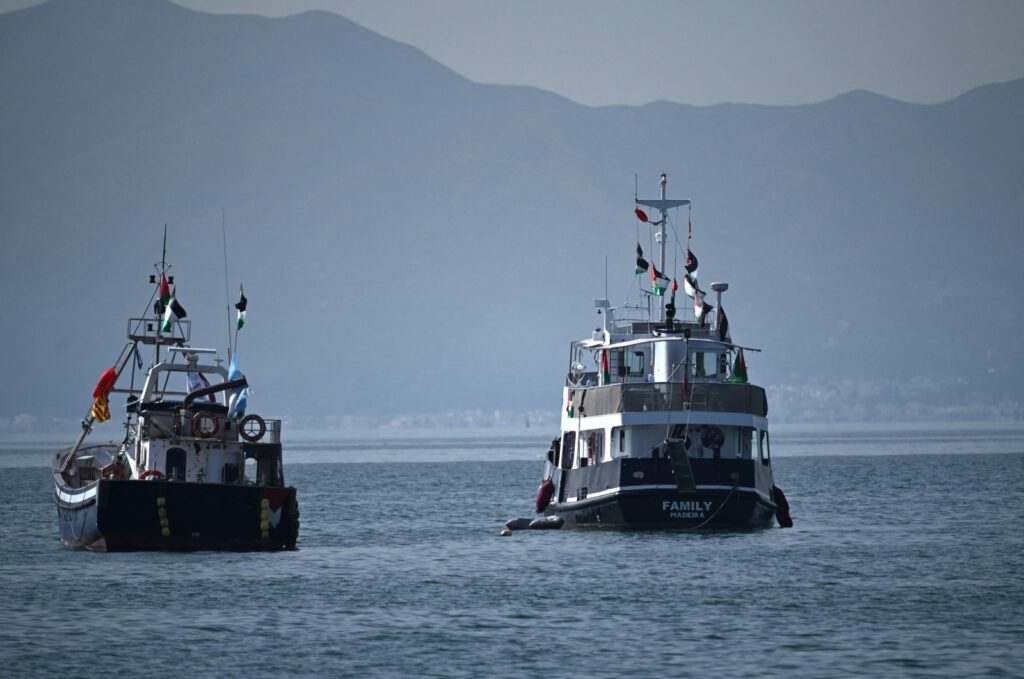
The Global Sumud Flotilla, which set sail in late August 2025, draws attention to fundamental legal questions rather than political ones. When civilian ships carrying humanitarian aid commence their maritime journey, the international legal order provides a framework that determines how they must be treated. A closer look shows that different treaties and conventions operate within an integrated framework creating concurrent protections that apply to such missions.
The fundamental principle is the freedom of navigationwhich is enshrined in the United Nations Convention on the Law of the Sea (UNCLOS). Civilian vessels on the high seas are generally protected from every form of obstruction, and their interception requires clear legal justification. This guaranteed safeguard can be interpreted explicitly when read alongside the rules of international humanitarian law, particularly those codified in the San Remo Manual on International Law Applicable to Armed Conflicts at Sea (1994). While San Remo states that naval blockades may exist during armed conflicts but subjects it to strict condition as is stated in Article 102 that the blockade cannot be intended to starve the civilian population. When read together with UNCLOS, it becomes very clear that during a conflict which has resulted into severe humanitarian crises, the high seas cannot become a lawless space and therefore the SumudFlotilla cannot lose its protection.
This interpretation is strengthened by more recent United Nations Security Council resolutions, including Resolution 2720 which demands humanitarian access without any hindrance to the people of Gaza and unrestricted access to deliver aid. Security Council decisions are binding on all United Nations member states and they build upon the general obligations stated under UNCLOS and humanitarian law. In other words, the Council’s directives incorporate general principles such as freedom of navigation and protection of civilians into specific obligations which are relevant to current humanitarian emergencies in Palestine.
The Fourth Geneva Convention which relates to the protection of civilian persons in time of war also ensures safe humanitarian passage of relief goods and prohibits interference with operations delivering essential supplies. If the Fourth Geneva Convention is looked at in combination with San Remo, which expressly prohibits targeting neutral humanitarian missions, it reflects the connection between treaty law and customary law which reinforces the same rule that civilian aid by sea must be facilitated rather than obstructed.
Moreover, the Genocide Convention and the Rome Statute of the International Criminal Court introduces further mechanisms of accountability. The Genocide Convention makes it obligatory on states to prevent inhuman acts that deliberately endanger civilian populations, while according to the Rome Statute starvation of civilians and obstruction of humanitarian aid is classified as war crimes. These legal instruments do not create any novel rights for flotillas but instead, they confirm existing maritime and humanitarian guarantees by attaching criminal responsibility for breach of humanitarian principles. Together, they signal that ignoring or obstructing humanitarian missions at sea is not merely a breach of navigation rights but may amount to a serious international crime.
The Global Sumud Flotilla, therefore, is not just a mission that merely holds symbolic significance but its very existence puts these integrated legal frameworks to the test. It examines the responsibility of the states under international law which puts a duty on them to ensure safe travel of the flotilla and to protect them from any obstruction while they carry the humanitarian aid. If states do not honour these obligations, it questions the credibility of international law especially in securing humanitarian access in conflict zones.
About Author: Shimaila Jehan Been is an Advocate with a Master’s in International Relations Peace and conflict studies, can be reached : shumailajehanbeen@gmail.com