

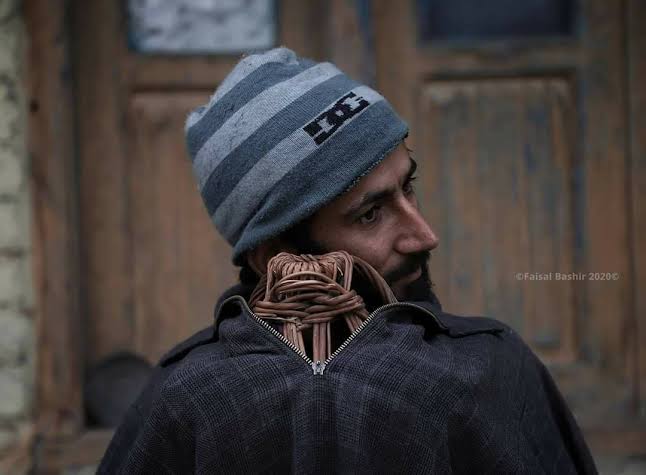
A kanger (Kashmiri pronunciation: [kãːɡɨr]), also known as kangri, kangid or kangir, is a traditional Kashmiri portable heater made of an earthen pot encased in woven wicker and filled with hot embers. Beyond being a source of warmth, the kanger holds deep cultural significance and is regarded as a fine example of Kashmiri craftsmanship.
Traditionally, the kanger is carried inside the pheran—the loose woollen cloak worn in Kashmir—or wrapped in a blanket. Its use becomes indispensable during Chillai Kalan, the harshest 40-day winter period in the Valley. In modern times, it is also used as a hand warmer, even alongside contemporary winter clothing such as jackets.
A typical kanger measures about six inches (15 cm) in diameter and can reach temperatures of nearly 150°F (66°C). They are produced in various sizes, including smaller versions for children and larger ones for adults.
It was long believed that Kashmiris adopted the use of the kanger from Italians who accompanied the Mughal emperors and visited the Valley during summer. In Italy, a similar device known as a scaldino existed, while braziers were also common in Spain.
However, historical evidence suggests that although similar heating devices were used in Europe, the kanger was already in use during the Mughal period in Kashmir, challenging the theory of its Italian origin.
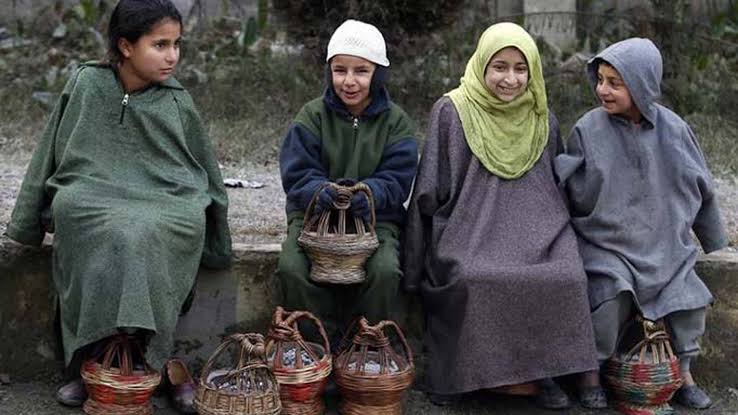
Visitors arriving in Kashmir during winter are often surprised to see people carrying fire pots in their hands or resting them on their laps. For Kashmiris, however, the kanger is an integral part of daily life, handled with skill and caution.
Even today, it remains in high demand and is commonly used in homes, shops, and even public and private offices during winter.
The production of a kanger involves two stages: after the earthen pots are moulded and fired, artisans complete the wickerwork by constructing handles, reinforcing the base with strong wicker sticks, and sometimes colouring it to enhance its aesthetic appeal. The craft is largely sustained by small-scale farmers and artisans known as kanile.
Charari Sharief town is particularly famous for a distinctive variety known as the Charar Kangir, while Anantnag is another major centre of production.
Though the sector remains largely unorganised, it is supported under various government schemes.
Recognising its cultural importance, the Tourism Department of Azad Jammu and Kashmir (AJK) has announced the celebration of ‘Pheran and Kangri Day’ on February 19 to promote Kashmiri heritage.
A popular Kashmiri proverb captures the emotional bond between a Kashmiri and the kanger:
“What Laila was on Majnun’s bosom, so is the kanger to a Kashmiri.”
This sentiment is echoed in a traditional verse:
Ai kangri! ai kangri!
Kurban tu Hour wu Peri!
Chun dur bughul mi girimut
Durd az dil mi buree.
(Oh, kanger! Oh, kanger!
You are a gift of houris and fairies;
When I hold you under my arm,
You drive fear from my heart.)
Despite its warmth and cultural value, prolonged use of the kanger has been linked to a form of skin cancer known as kangri cancer. First studied by W. J. Elmslie in 1866, it was initially attributed to repeated burns but is now believed to result from carcinogenic by-products released during the combustion of charcoal.
Even with modern heating alternatives, the kanger continues to symbolize resilience, tradition, and the enduring warmth of Kashmiri culture.






Leave a Reply