

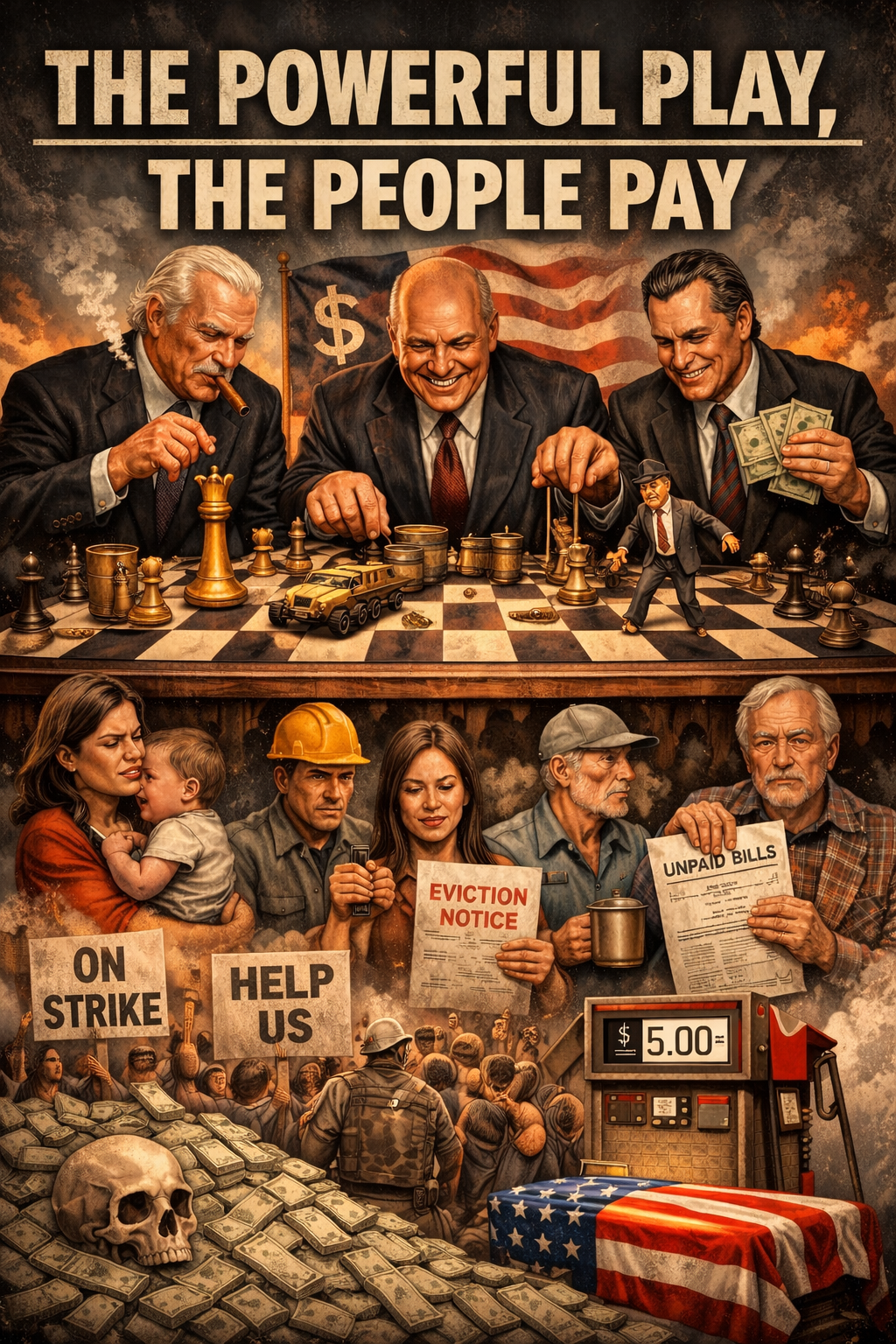
Wars are often painted as battles between nations, calls for patriotism, or struggles for justice. But in reality, they are games played by the powerful — a chessboard where elites move pieces as if it were a pastime, while ordinary people bear the cost. Citizens are told to “stand by their country,” to honor heroes, and to mourn selective tragedies, yet few realize that their own side often contributes to the destruction. While the powerful meet, negotiate, and plan, lives are lost silently, statistics are ignored, and the human suffering behind headlines fades quickly from memory. The war is not about morality or justice — it is about power, strategy, and profit, while the people pay with their blood, homes, and futures.
History is filled with examples of wars glorified as noble struggles, yet at their core, they have always served the interests of the powerful. From old battles to modern conflicts, elites have framed participation as patriotism, while ordinary people are treated like pawns on a chessboard. Recent events illustrate this starkly: 26 lives were lost in Pehlgam, but how many of us know how many died during the conflict — maybe more than that? Entire communities suffer, yet the elites see these deaths as a small price to pay for popularity, power consolidation, or minor strategic advantage — hundreds of lives lost for the slightest benefit to those at the top.
The pattern repeats itself across the world. Conflicts become chess matches where the people remain pawns, while elites use patriotism and religion to justify war. Religion is frequently invoked even by those who rarely follow its teachings; faith becomes a convenient tool rather than a guiding principle. History is full of examples of such switching narratives: Nelson Mandela was once labeled a terrorist, yet later celebrated globally and awarded the Nobel Peace Prize. Yasser Arafat, too, went from “terrorist” to Nobel laureate, while the Crusades were waged in the name of religion by armies that often ignored the very doctrines they claimed to uphold. Leaders glorify or vilify individuals as convenient, praising them one day and condemning them the next, manipulating public perception to suit political objectives. Patriotism is invoked as a rallying cry, yet it is a tool to manipulate sentiment rather than a moral imperative. While the elites remain insulated and their children live in comfort, hundreds of lives are sacrificed for the slightest political benefit. Modern war, much like historical conflicts, demonstrates that valor and duty often mask the real purpose: maintaining power and privilege at the expense of human lives.
Wars will continue as long as the powerful see them as games and the people accept them as duty. True patriotism is not blind loyalty or unquestioning support; it is the courage to question, to demand accountability, and to prioritize human life over political gain. Until society recognizes the royal game being played, ordinary citizens will continue to pay with their lives, while the elites watch, plan, and profit. If we are to honor those who die, it is not by cheering on battles they did not choose, but by challenging the system that treats human beings as mere pawns in a game of power.
By Umer Baba





Leave a Reply