Unreserved Voices of Jammu and Kashmir Must Speak Up for Fairness
Opinion by||Junaid Peerzada
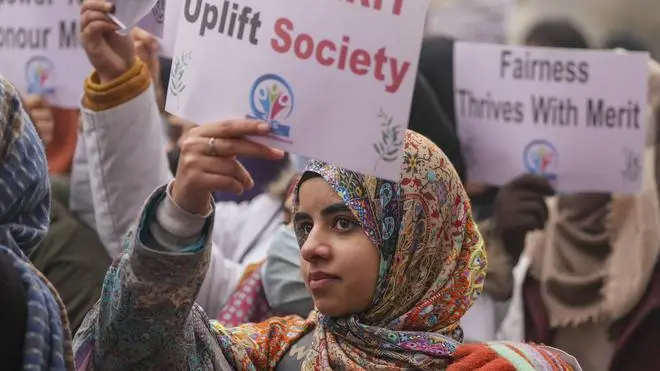
The people of Jammu and Kashmir belonging to the unreserved (general) category must now stand up for themselves. This issue affects them directly, and therefore they must lead the struggle for fairness and equal opportunity. The general category public has long demonstrated strong faith in democracy by voting in large numbers, organising rallies, mobilising communities, and placing trust in political leadership. Yet despite this active participation, a growing sense of frustration has taken root, particularly over access to government jobs and equal opportunities.
This frustration arises from the belief that the system is no longer working for unreserved candidates. General category youth aspire to government employment and prepare diligently for competitive examinations, relying on merit and hard work. However, opportunities increasingly seem out of reach. Highly qualified candidates who fulfil all eligibility criteria are repeatedly overlooked, not due to lack of capability, but because existing recruitment and reservation policies leave very limited space for those outside reserved categories.
The reservation policy was introduced to address historical injustice and social disadvantage, and it was never intended to permanently marginalise merit. In Jammu and Kashmir, however, recruitment trends over the years have created both a perception and a reality that unreserved candidates are receiving fewer chances. This has deeply personal consequences. Years of preparation, financial sacrifices by families, and emotional investment often fail to translate into employment, leading to stress, economic strain, and erosion of trust in the system.
Political leadership has further aggravated this sense of alienation. The general category public has consistently supported leaders not only at the ballot box but also through rallies and public advocacy. Yet their genuine concerns remain largely unaddressed. There has been no sustained political will, no transparent dialogue, and no serious legislative effort to review the issue. Promises resurface during elections and are forgotten once power is secured, deepening public distrust and disillusionment.
Waiting for political leaders to act is no longer a viable option. History shows that meaningful change often emerges when citizens organise and assert their rights through peaceful and constitutional means. Democracy is strengthened when people question authority responsibly. The unreserved public of Jammu and Kashmir must come together on a non-partisan platform, uniting students, job aspirants, parents, professionals, and community members to demand a comprehensive, fact-based review of reservation and recruitment policies that balances social justice with merit.
This movement must remain peaceful, disciplined, and within the framework of the Constitution, using legitimate avenues such as courts, responsible media engagement, and informed public debate. It must also be clearly stated that this is not a movement against reservation itself, but against imbalance and exclusion. Social justice and merit are not opposing principles. For the unreserved public of Jammu and Kashmir, justice will not come by waiting silently; it will come only when the people themselves lead the struggle, united and determined in their demand for fairness.
About Author: Junaid Peerzada is a postgraduate in International Relations Peace and Conflict Studies and is currently pursuing a Master’s degree in History. He can be reached at pirjunaid1001@gmail.com.