

Arif Beigh
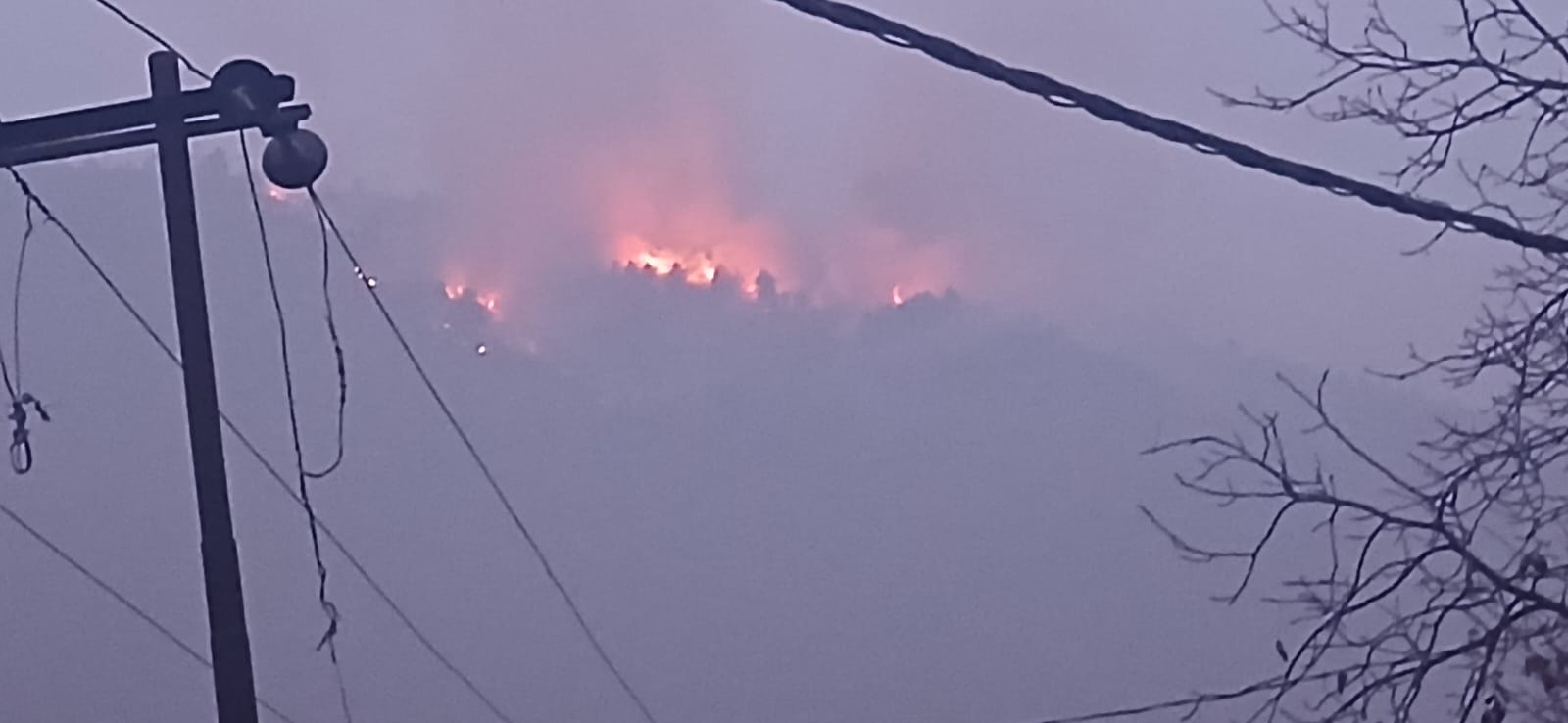
A forest fire was reported once again on Monday in the Wudder area of Kangan, triggering renewed public concern over the Forest Department’s preparedness and preventive strategy. Locals say the incident is not an isolated occurrence, but part of a series of repeated fires that have affected the same forest belt over time.
Residents allege that despite multiple incidents in the past, visible preventive measures on the ground remain inadequate, allowing forest fires to recur with alarming frequency. The repeated blazes have resulted in damage to forest cover, disruption of wildlife habitat, and growing anxiety among communities residing near forest areas.
Questions Raised Over Forest Fire Management
Following the latest blaze, local residents questioned the Forest Department’s fire management practices, demanding greater accountability and proactive intervention. People claim that fire lines are either poorly maintained or non-functional, while early warning and rapid response mechanisms appear insufficient.
“Every time a fire breaks out, we only hear about damage assessment. There is no permanent solution or preventive planning visible on the ground,” said a local resident.
Experts Flag Possible Human-Induced Causes
Environmental observers and local experts told, that human interference cannot be ruled out in some forest fire incidents. They pointed out that forest areas are, at times, allegedly set ablaze to encourage the growth of Morel (Gucchi) mushrooms, a high-value seasonal forest produce.
“While Morel collection provides short-term income, setting forest land on fire causes irreversible ecological harm. It weakens soil fertility, destroys biodiversity, and significantly increases the risk of uncontrollable wildfires,” experts cautioned.
Ecological and Public Safety Risks
Environmentalists warn that repeated forest fires pose a serious threat not only to fragile ecosystems but also to nearby habitations, livestock, and forest-dependent livelihoods. Unchecked fires, they say, can lead to long-term consequences such as soil erosion, depletion of water sources, and permanent ecological imbalance.
Public Demands Swift and Concrete Action
In response to the recurring incidents, residents and civil society groups have called for:
A comprehensive investigation into repeated fires in the same forest areas
Strict legal action against anyone found deliberately causing forest fires
Strengthening of fire prevention, monitoring, and rapid response systems
Enhanced community involvement and awareness programs for forest protection
The repeated forest fire incidents in Wudder Kangan have once again underlined the urgent need for effective governance, transparency, and accountability in forest management to protect the region’s vulnerable environment.










Leave a Reply