

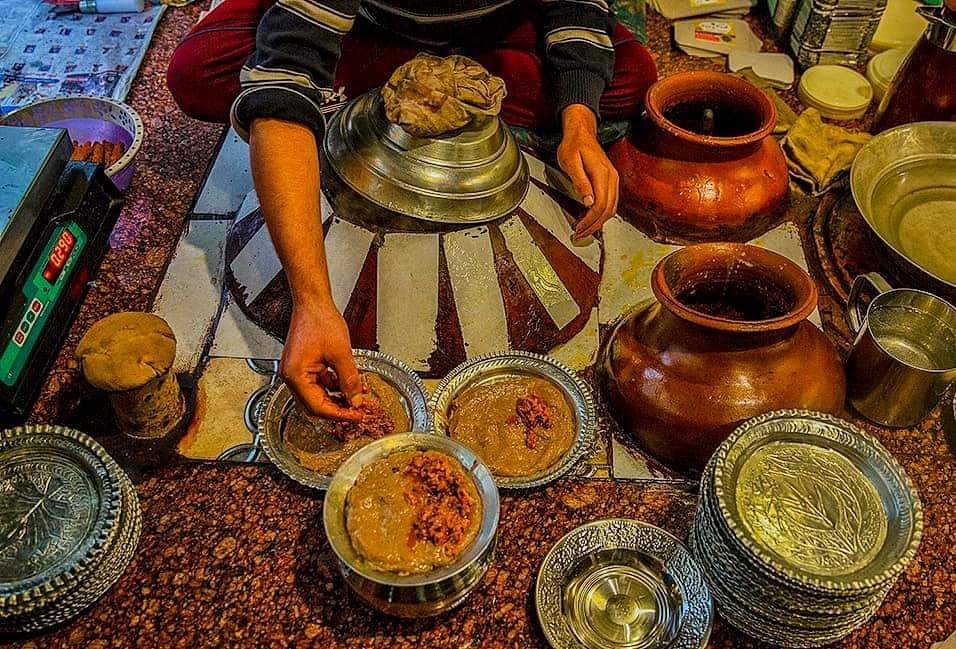
As winter tightens its grip on Kashmir and temperatures fall below zero, people in the Valley rely on traditional ways to stay warm. One such time-honoured winter staple is Harissa, a centuries-old delicacy that remains an essential breakfast food during the harsh winter months.
Prepared from mutton, rice, and a blend of spices, Harissa is slow-cooked overnight in underground earthen pots using steam. Rich in calories and warmth, it is consumed for nearly five months of winter to help the body withstand extreme cold.
Historians trace Harissa’s arrival in Kashmir to the 14th century. Srinagar, in particular, has been serving this dish for over 200 years, with many families carrying the tradition across generations.
“This shop is about 120 years old. My father and grandfather ran it before me,” said Ali Mohammad Bhat, a Harissa seller. “Harissa is ideal for winter—it keeps the entire body warm. We use sheep meat, not goat, along with several spices. We sell it for four months during winter. People who eat Harissa regularly don’t suffer much from chest-related problems. We start selling at 6 am, and it finishes by noon. It’s healthy and nourishing.”
Harissa makers believe that eating the dish in the morning keeps the body warm throughout the day, even during sub-zero temperatures. The preparation itself is labour-intensive and requires skilled chefs who cook it overnight for nearly eight hours.
“Making Harissa is very difficult, but we are keeping this tradition alive,” said Imran Ali Bhat, another Harissa maker. “First, we heat everything, add rice, meat, and spices, and then steam it for eight hours in an earthen pot. Coal is placed around the pot until around 3 am. We start selling it at 6 am. It originally came from Iran, and the tradition continues even today.”
In recent years, modern cafés have also started including Harissa on their menus due to growing demand. Cafés like Chai Jaai serve Harissa in traditional Kashmiri copper utensils, enhancing the cultural experience. The hot oil tadka poured in front of customers adds to its visual and sensory appeal.
“Tourists especially come for Harissa,” said Rafiq Ahmad, a café manager. “People are now ordering it from across India. Earlier, it was available only at traditional outlets, but cafés have helped make it more popular.”
Tourists, too, are drawn to the authentic taste and heritage of the dish.
“We specifically came here to eat Harissa,” said Intikhaab Aalam, a tourist. “I had heard a lot about it. It’s delicious, energising, and served beautifully. I remember people standing in long queues for Harissa during winters in Kashmir.”
With the onset of winter, Harissa replaces many regular breakfast items and becomes the most preferred morning meal for locals, symbolising warmth, tradition, and the enduring culinary heritage of Kashmir.









Leave a Reply