


- Birdwatching is becoming increasingly popular in Nepal, contributing to biodiversity conservation through public engagement and ecological data collection.
- Despite its popularity, a lack of public participation and data-sharing practices affect record-keeping.
- Researchers say documentation provided by birdwatchers helps fulfill data gaps related to bird population and habitat.
- Birdwatching helps promote local destinations and generate economic activity, though Nepal as a birdwatching destination remains largely untapped.
KATHMANDU — As a child, Shankar Tiwari and his friends killed birds for fun around Chitwan National Park in central Nepal, where they grew up. Years later, a foreign guest at the hotel where Tiwari worked took him birdwatching and turned the hunter into a bird lover.
The striking yellow and black plumage and red eyes of the black-hooded oriole (Oriolus xanthornus), which he saw magnified through binoculars for the first time, sparked Tiwari’s lifelong passion for birds, he said. Today, the 57-year-old is one of Nepal’s leading birdwatching guides and a prominent member of the country’s growing birdwatching community that is contributing to bird conservation while promoting it as a tourism attraction.

“The birdwatching community has grown significantly today,” he said. “This has helped not just in raising awareness of the birds, but the community also helps in keeping tabs on the birds — how their habitat and population have changed over the years.”
A new study suggests that birdwatching is becoming increasingly popular in Nepal, particularly among the young, and that this trend “contributes to biodiversity conservation through public engagement and ecological data collection.” In Nepal’s capital, Kathmandu, nonprofits like Bird Conservation Nepal (BCN) and Friends of Birds organize events on weekends, drawing a diverse group of birdwatchers.
Despite the increasing popularity of birdwatching, the study notes, public participation and data sharing remain limited.

In a survey of 135 birdwatchers led by researcher Kamal Raj Gosai, only 37% shared their birdwatching records with platforms such as eBird, the online database of bird observations, or with bird conservation organizations, according to the study. A majority — around 46% — kept their data private.
Hem Bahadur Katuwal, co-author of the study and assistant professor at China’s Xishuangbanna Tropical Botanical Garden, said many birdwatchers, particularly young university students, may not be entirely aware of the importance of data sharing and its role in conservation. He added that birdwatchers should record their observations, including the species they spot, the number of individuals seen and the location of each sighting, among others.
“This helps in fulfilling the data gaps related to bird population and habitat,” he said. “The data also helps us establish trends and assess if the birds are in danger while compiling the national Red Data List of birds.”
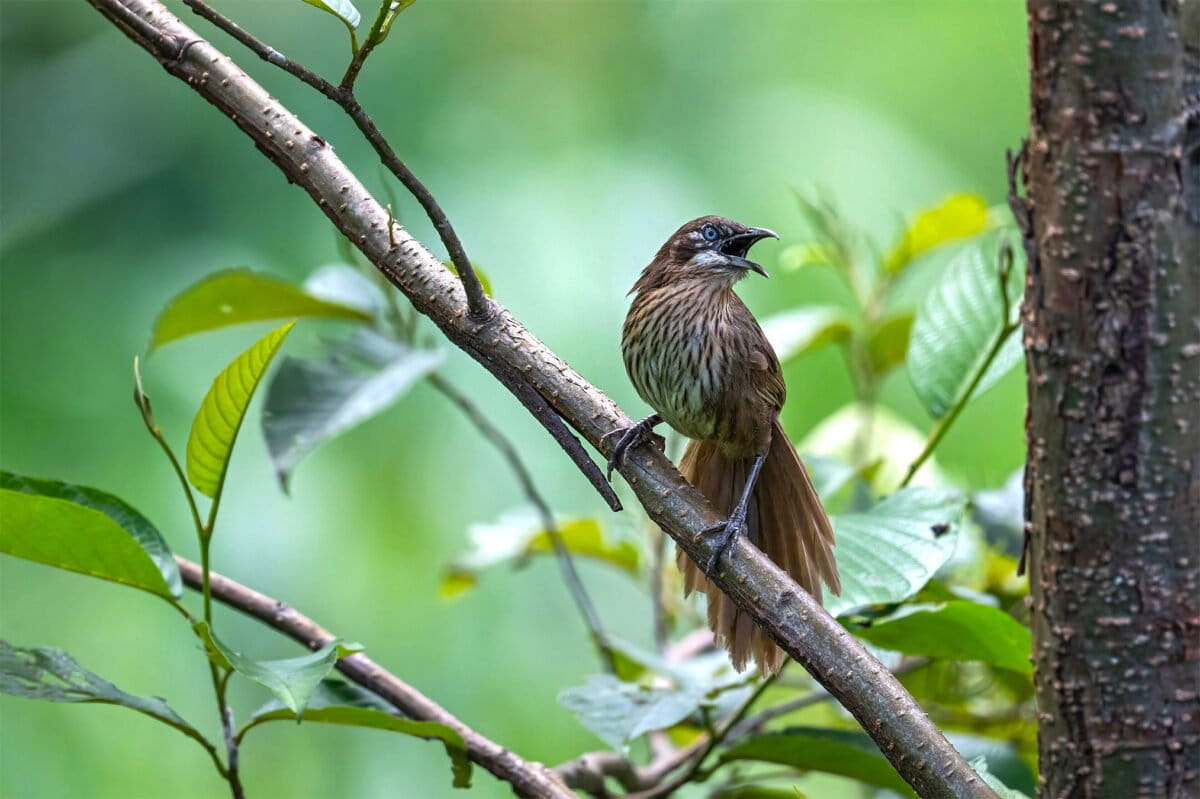
Nepal is home to more than 900 bird species, of which 40 are globally threatened and 172 are nationally threatened. The country also has the enigmatic spiny babbler (Turdoides nipalensis), the only bird species endemic to Nepal.
However, conservationists like Ishana Thapa, CEO of BCN, say that growing urbanization and infrastructure development in Kathmandu and across Nepal, along with climate change, are disturbing bird habitats and populations. A survey conducted between 2021 and 2022 along Kathmandu’s Bagmati River corridor by Central Department of Zoology, in Kathmandu’s Tribhuvan University, recorded only 67 bird species, compared to the more than 100 species historically seen in the area.


The large flock of birds that once cast a shadow on the ground while flying in Koshi Tappu Wildlife Reserve — one of Nepal’s prized birdwatching locations — is now seen in limited numbers, Tiwari said. Duck species such as the northern pintail (Anas acuta), gadwall (Mareca strepera), Baer’s pochard (Aythya baeri) and common goldeneye (Bucephala clangula) have significantly decreased due to increased human activity.
“In such cases, the data collected from a birdwatching group can serve as a record of how the habitat is and what kind of disturbances there are specifically,” Thapa said. “This helps us in advocacy and also lobbying to protect bird habitats.” As a birdwatcher, Tiwari said he has seen such examples of data-sharing firsthand and likewise shares data with relevant organizations.
While data from birdwatchers help assess the status of various bird species, they also contribute to documenting new species records, said Tiwari, who proactively shares such information on eBird and with organizations such as BCN. With 516 sightings, he tops the platform’s “species leader” ranking for Nepal for documenting the highest number of unique bird species in a specific location. Most recently, in 2024, he said, he documented the white-cheeked starling (Spodiopsar cineraceus), Naumann’s thrush (Turdus naumanni) and spotted flycatcher (Muscicapa striata) through photographs for the first time in Nepal.
With an abundance of resident and migratory birds found from the forests around Kathmandu to national parks and wildlife reserves such as Chitwan, Bardiya National Park and Koshi Tappu Wildlife Reserve, conservationists and tourism entrepreneurs see Nepal as a haven for birdwatching, a potential that remains largely untapped. Katuwal’s study shows that birdwatching could not only enhance local destinations but also generate economic benefits through tourism, with the survey indicating that birdwatchers in the tourism sector spent as much as 40,000 rupees ($260) per trip.
“We have so many bird species in Nepal, but we neither have data on the number of tourists who visit Nepal specifically for birdwatching nor are we promoting Nepal as a birdwatching destination,” Katuwal said.

Thapa from BCN agreed. She said government bodies should proactively promote Nepal as a birdwatching destination, just as they do for trekking and religious tourism, while urging the country to participate in international bird fairs to showcase its offerings. For instance, while quasi-government bodies like the Nepal Tourism Board promote religious places like Lumbini, which is the Buddha’s birthplace, they could simultaneously promote it for birdwatchers, as the place is known for the threatened sarus crane (Antigone antigone).
“This is a low investment that can bring great benefits to our tourism sector,” Thapa said. “So far, the only promotion is either being done from an individual level or by those involved in tourism in the private sector.”
In many cases, birdwatching enthusiasts are making that effort, Tiwari said. To encourage birdwatching tourism, he founded the Travel Nepal ecotourism organization, catering to tourists who specifically visit Nepal for birdwatching. Though the numbers are lower than those of visitors who travel for trekking and sightseeing, he said it was still encouraging to see Nepal on the list of global birdwatching destinations.
“I feel like I’m playing a small part in promoting bird tourism in Nepal,” he said. “It also feels like I am paying my debt in some ways. As kids, we didn’t know, so we killed birds. I’m very remorseful. So now I’m involved in bird conservation, raising awareness and getting more people to see and know about birds.”
Banner image:A spiny babbler (Turdoides nipalensis), the only bird species endemic to Nepal. Image by Mildeep via Wikimedia Commons (CC BY-SA 4.0).












Leave a Reply