

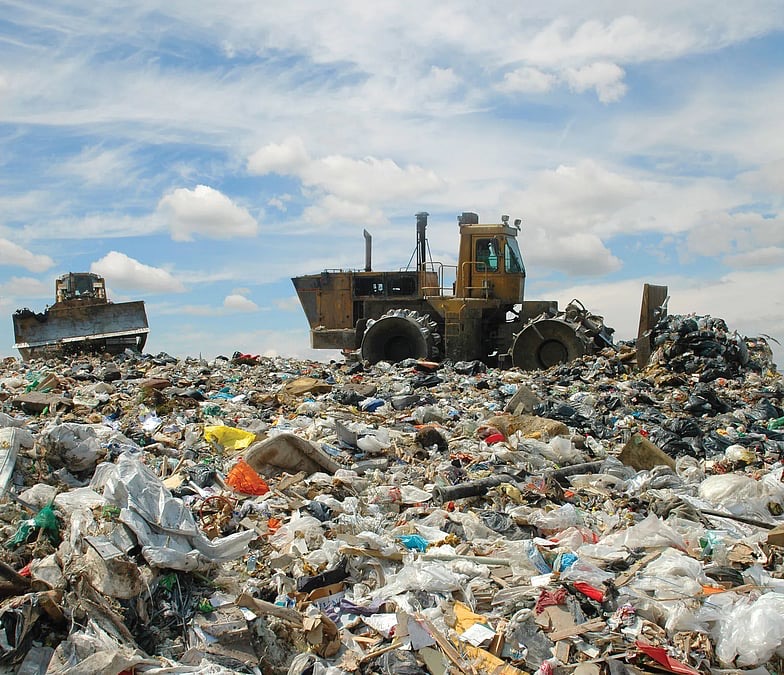
Only 31–39% waste treated; Rs 103.65 cr user charges uncollected, 18.35 lakh MT waste remains unprocessed across ULBs
Raja Syed Rather
The Comptroller and Auditor General (CAG) of India has flagged serious inefficiencies in the management of Solid Waste Management (SWM) in Jammu and Kashmir, revealing significant underutilisation of funds and poor waste processing.
According to the audit report for the period ending March 2022, only Rs 74.55 crore (43 per cent) out of the available Rs 175.33 crore was utilised during 2017–22. The report noted that fund underutilisation ranged between 74 and 84 per cent during these years.
The audit, accessed by the news agency—Kashmir News Observer (KNO), revealed that merely 31 to 39 per cent of collected waste was treated, while around 18.35 lakh metric tonnes of unprocessed waste accumulated across urban local bodies.
Additionally, Rs 103.65 crore in user charges remained uncollected, highlighting lapses in revenue realisation and governance.
The report attributed underutilisation in 2018–19 partly to non-utilisation of Rs 28.55 crore released under Swachh Bharat Mission (SBM). For 2021–22, it noted that Rs 89.55 crore was released by the Housing and Urban Development Department (H&UDD), J&K, at the fag end of the financial year (March 30, 2022), limiting its utilisation.
Audit of 17 sampled Urban Local Bodies (ULBs), including JMC and SMC, revealed that the prescribed method of assessing waste generation—based on seasonal sample collection across three major seasons—was not followed. Instead, waste generation was estimated using average per capita figures, rendering the assessment unrealistic.
The audit further observed that weighbridges and a computerised Management Information System (MIS) were not available at waste dumping sites in 16 sampled ULBs, including JMC, making it difficult to accurately determine the actual quantity of waste collected.
It was also noted that solid waste generation declined from 1,592.78 metric tonnes (MT) per day in 2017–18 to 1,544.79 MT per day in 2021–22. Despite this, between 91 per cent and 99 per cent of the waste generated in ULBs across the State/UT was reportedly collected during the period 2017–22.
It was further observed that only 31 to 39 per cent of the collected waste was treated, while a significant portion continued to be dumped at landfills or open dumping sites, posing serious environmental risks. During the Exit Conference (February 2025), the Commissioner/Secretary stated that, under SBM 2.0, 78 Solid Waste Management Centres (SWMCs) had been approved for scientific processing of municipal solid waste, of which 33 had been made operational by 2024–25.
However, given the low proportion of waste being treated (39 per cent) and the risks associated with unscientific disposal, there is an urgent need to expedite the completion of all 78 SWMCs.
Audit further revealed that no dedicated waste deposition centres had been established for the safe disposal of Domestic Hazardous Waste (DHW). Instead, DHW was being disposed of along with municipal solid waste (MSW) without segregation.
Records from seven sampled ULBs in the Jammu Division indicated that DHW was reportedly disposed of through burial in pits. However, during joint physical inspections conducted between December 2022 and March 2023, audit teams found no evidence supporting the practice of deep pit burial as claimed. The lack of segregation and improper disposal of DHW alongside MSW pose significant public health risks.
Additionally, audit findings across 17 sampled ULBs showed that sanitary waste was not being segregated at source. No separate bins were provided for dry or non-biodegradable waste, resulting in improper disposal practices that could potentially endanger public health.
Audit of 17 sampled ULBs, including JMC and SMC, revealed that no user charges were collected in three ULBs, while collection remained partial in the remaining 14 during 2017–22. Against an estimated Rs 139.04 crore collectable from waste generators under door-to-door collection, only Rs 35.39 crore was realised, leaving a shortfall of at least Rs 103.65 crore.
Land for waste disposal had been allotted to all 17 ULBs by the concerned Deputy Commissioners. However, while JMC, SMC and 13 other ULBs were using the designated sites, MC Hiranagar and MC Rajouri were found dumping waste at unauthorised locations, raising serious environmental concerns.
As of March 2022, about 18.35 lakh metric tonnes of unprocessed waste were lying in the open at dumping sites of eight ULBs, including JMC and SMC, indicating failure to adopt prescribed recycling or treatment methods. This accumulation poses significant risks to air, water and soil quality, leading to potential health hazards.
Audit also noted poor compliance with penalties imposed by J&KPCC/NGT, as only two out of eight penalised ULBs deposited Rs 56.44 lakh between February 2021 and May 2022. Further, 14 out of 17 ULBs lacked any waste processing or treatment facilities, resulting in unscientific dumping of waste without any physical, chemical or biological treatment—(KNO)


Leave a Reply