

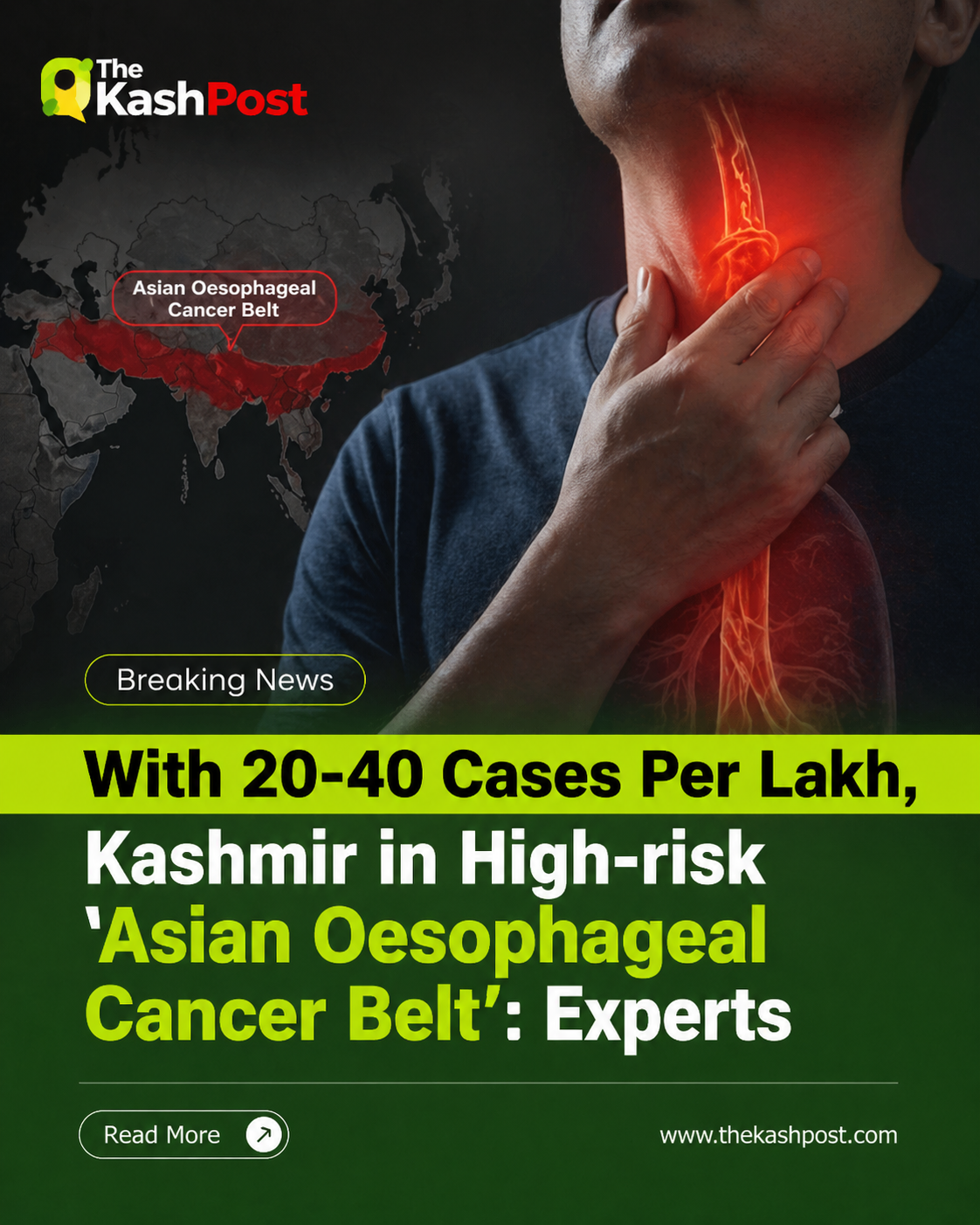
SRINAGAR: Kashmir continues to witness a relatively high burden of oesophageal cancer, with medical experts attributing the trend to a mix of cultural practices, environmental exposure, and improved diagnostic capabilities over time.
Dr Shahid Wani, Head of the Oncology Department at Government Medical College (GMC) Anantnag, said that Kashmir forms part of the well-known “Asian oesophageal cancer belt”—a geographical stretch with a high incidence of oesophageal squamous cell carcinoma. The belt extends from the Caspian littoral of Iran, particularly Golestan Province, through Central Asia to northern China, with Kashmir sharing similar disease patterns.
Dr Wani explained that the prevalence of oesophageal cancer in the Valley was likely high even decades ago, but remained underreported due to limited diagnostic facilities. “Today, with better screening and advanced medical infrastructure, more cases are being detected, which gives an impression of a rising trend,” he said.
Among the major contributing factors, the doctor highlighted the widespread consumption of Noon Chai (salt tea), a staple in Kashmiri households. He noted that drinking the beverage at very high temperatures—especially during the harsh winter months—can lead to repeated thermal injury to the inner lining of the oesophagus and stomach.
Chronic exposure to extremely hot beverages damages the mucosal lining, which over time can increase the risk of developing oesophageal and even gastric cancers,” he said.
The oncologist also pointed to traditional food storage practices as a potential concern. Improper drying and storage of vegetables can result in fungal contamination, leading to the production of mycotoxins. Among these, aflatoxins—classified as Group 1 carcinogens—are known to cause serious health risks, including cancer. “While aflatoxins are more strongly linked to liver cancer, their presence in contaminated food highlights the broader issue of carcinogenic exposure in daily diets,” he said.
Tobacco consumption in various forms—particularly smoking and the swallowing of tobacco juices—was identified as another major risk factor. These practices expose the gastrointestinal tract to carcinogens, significantly increasing the likelihood of oesophageal and gastric cancers.
Addressing concerns around the use of pesticides and fungicides, Dr Wani acknowledged that these substances contain carcinogenic chemicals. However, he said that there is currently no conclusive evidence linking their use to the higher incidence of oesophageal cancer in Kashmir.
“To understand this, one can compare with Punjab, where pesticide use is significantly higher, yet the prevalence of oesophageal cancer is around 5 cases per lakh population. In contrast, Kashmir reports 20 to 40 cases per lakh population,” he said, suggesting that other environmental and lifestyle factors may play a more dominant role.
Dr Wani stressed the importance of public awareness, early detection, and lifestyle modifications in reducing the burden of gastrointestinal cancers in the region. He advised people to avoid consuming excessively hot beverages, ensure proper food storage, and steer clear of tobacco in all forms.
“Timely diagnosis and preventive strategies can go a long way in controlling the disease. Awareness at the community level is crucial,” he said. (KNO)







Leave a Reply