

Opinion by || Shimaila Jehan Been
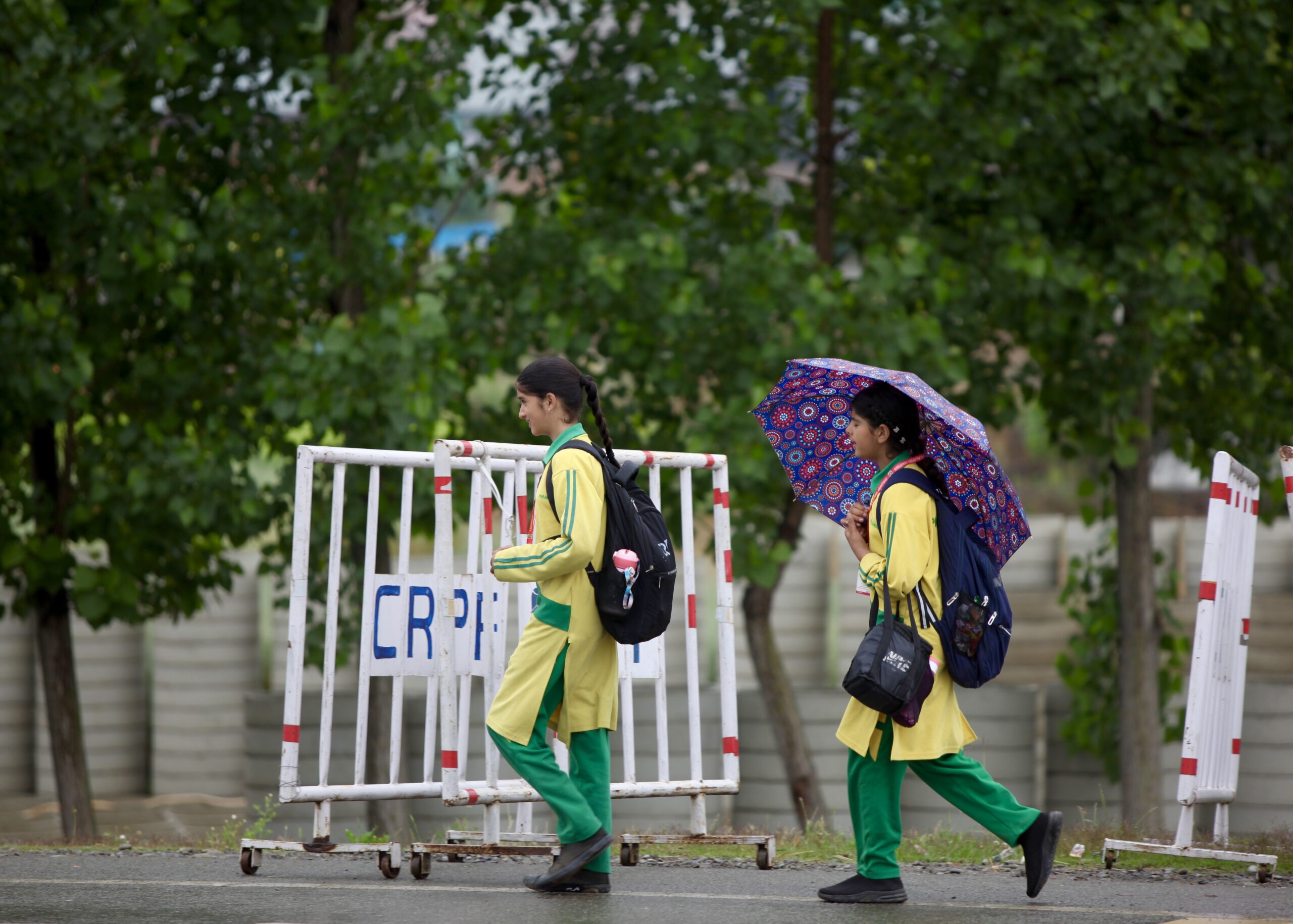
There is a girl growing up somewhere in Kashmir right now. She is maybe twelve, maybe fifteen. She is sharp. She laughs loudly. She has opinions about things. She knows what she wants to be when she grows up. But somewhere around her, quietly, almost without anyone noticing, the world is already building a cage around her. Not out of cruelty but out of habit. But a cage is a cage, no matter what it is built from.
She does not know it yet, but her life has already been decided. Not by her. Never by her.
Before she is anything else, she is a daughter. And in Kashmiri society, being a daughter comes with a weight that nobody hands you in a box but you feel it every single day. It sits on your shoulders when you come home a little late. It follows you when you laugh too freely. It whispers in your ear when you wear something that someone somewhere might consider too much. She is not just a girl living her life. She is her family’s honour. Their izzat.
Every step she takes outside the house is a step that reflects on her father, her brothers, her uncles and the entire extended family that barely knows what she is going through on any given day. She learns very early that she is not living for herself. She is living so that nobody talks. She is living for people who have contributed absolutely nothing to her life, yet somehow have the loudest voices in it.
And what is the solution to all of this? What is the thing that will finally free her parents from the burden of keeping her honour intact? Marriage. Get her married and the weight shifts. That is the plan. That has always been the plan.
“When are you getting married?” is not just a question in Kashmir. It is a verdict. It is a reminder that no matter what she has achieved, no matter what she has worked for or dreamed about, she is somehow still incomplete. Her entire identity gets funnelled into one single event. One day. One decision. One man. The girl who wanted to see the world has been told she can do that after marriage. The girl who wanted to build something of her own has been told her real work starts after marriage. So,she walks into marriage not as a whole person who has lived and chosen and grown. She walks in half-formed, still in the middle of becoming herself, and from the very first day, she is not given a single moment to finish that process.
The wedding ends. The music stops. The relatives go home full of food and opinions. And she is left standing in a house that is not hers, surrounded by people she barely knows. Her in-laws do not see a person when they look at her. They see a role. A daughter-in-law. A title that comes with a list of duties longer than anything she has ever been handed before. She is expected to wake up early, to serve, to smile, to adjust, to accommodate, to shrink and shrink and shrink until she fits into the shape this household has already decided she should occupy.
Nobody sits her down and says, welcome, take your time, this is your home now. Nobody asks her how she is doing in those first weeks. She has walked into a completely new world and she is expected not just to survive in it but to serve it immediately, without hesitation, without complaint, and without ever letting the exhaustion show on her face.
She needs time. She needs to be accepted as a human being, not just tolerated as a functional addition to the household. She needs warmth, not performance. She needs someone to see her. But in too many homes across Kashmir, nobody is looking at her that way.
Then comes the religion. And this is where the story becomes something painful to say out loud but impossible to keep quiet about. She is told to dress a certain way and she accepts thembecause she respects her faith, because she wants to be a good Muslim woman and this is what she has been told that looks like. But the same urgency never reaches her husband. Nobody sits him down and explains that under the very religion he uses to define her duties, she has rights that he is obligated to protect. That she is not required by Islam to cook for his family or serve his parents. That those are acts of generosity, not acts of duty, and there is a difference between the two that changes everything about how they should be received. That the same faith demanding her modesty also demands his fairness, his provision, his respect, not just in front of guests but in the middle of an ordinary Tuesday when nobody is watching.
He applies religion when it is convenient for him. And it is always convenient when it is pointed at her.
If she goes out to work, she is blamed for not being present enough, for not giving enough of her time to him and his family, for prioritizing the wrong things. If she stays home and dedicates every hour of her day to that household, she is looked at as someone who could not manage to be useful in the real world. And the husband, regardless of which version of her life she is living, does not help in the house. Not because he is a bad person necessarily, but because nobody ever told him he was supposed to.
There is something else too, something that carries a specific kind of heartbreak. The mother-in-law. Somewhere inside her, underneath the authority and the expectations, there is a young woman she used to be. A girl who was nervous the night she arrived at a strange house. And yet she looks away. She holds expectations she would never have wanted held against her. She does not speak up when her son is careless or her daughter-in-law is visibly drowning. She stays silent because the only power this system ever offered her was the power to one day be on the other side of it. And she will not let go of that power, even if holding it means watching another woman suffer the same way she once did.
And through all of this, if the woman reaches a point where she thinks about leaving, where she finally asks herself whether she deserves something different, the world does not make space for that question. She cannot easily walk away. Not because her faith forbids it outright, not because the law will stop her, but because of every single person outside her marriage who she will have to face afterward. The people who never once asked how she was doing inside that marriage but will have endless opinions about why she left it.
Her parents will be asked to explain. And that explaining will feel to them like shame. Who will accept a divorced woman, they will think. What will people say. She will be a burden again. Whatever she is going through, she must find a way to manage it, because surviving a bad marriage is more socially acceptable than ending one. Her happiness is not the primary concern in that calculation. Her parents’ standing in the community is. Her honour, which was always really everyone else’s honour to begin with, is.
This is the truth that needs to be said, loudly and without apology. Marriage is not the beginning of a woman’s life. It is not her purpose or her destination or the thing that makes her a complete person. It is one part of a life that belongs entirely and only to her. Be educated. Earn your own money. Build something that is yours before you build a life with someone else. Know what you deserve before you accept what you are given. Do not rush into marriage because the clock that other people set is getting loud. That clock was never yours to begin with. You were a full person before that wedding. You are still a full person now. And you deserve a life that knows the difference.
About Author: Shimaila Jehan Been is an Advocate with a Master’s in International Relations Peace and conflict studies, can be reached : shumailajehanbeen@gmail.com







Leave a Reply